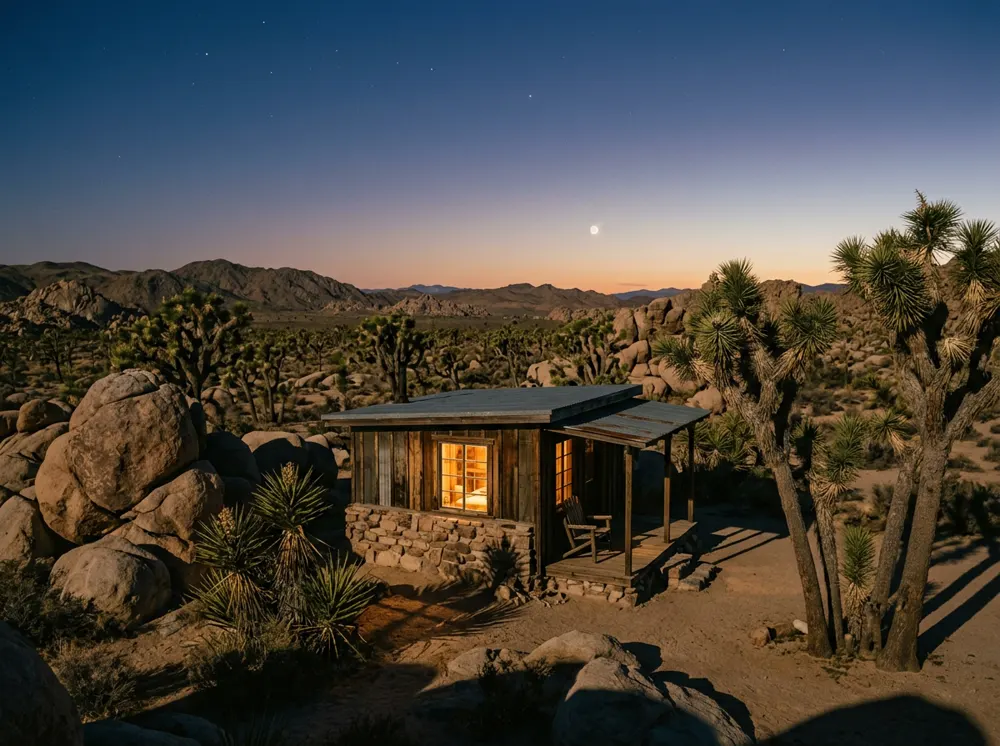
Drive east out of Twentynine Palms toward Wonder Valley and the landscape empties out almost completely. Creosote. Sand. A sky the size of a continent. And then, every few hundred yards, a small rectangular box sitting alone in the middle of nothing.
These are the jackrabbit homesteads. Under the Small Tract Act of 1938, the federal government offered five-acre parcels of desert land for a small fee to anyone who would "improve" them — typically by building a modest cabin within a set period. Thousands of people took up the offer. Veterans after the war, city families wanting a weekend escape, dreamers who had never seen the desert in August.
Architecture without architects
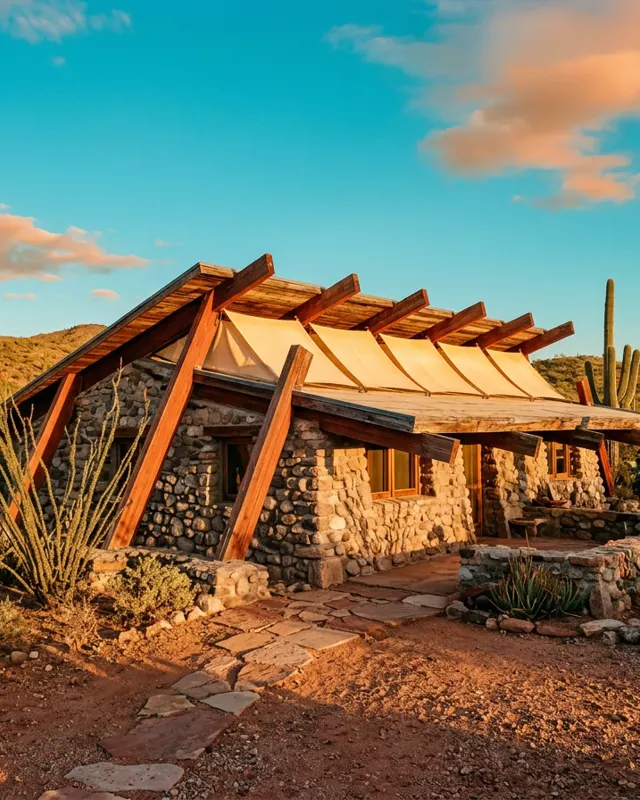
Nobody designed these cabins in the way we usually mean it. They were built from mail-order plans, scavenged lumber, cinder block and whatever could be hauled out on a pickup. Most have a flat or gently sloped roof, a single door, a few windows and, if the owner was ambitious, a porch.
The desert edits ruthlessly. What survives is only what was essential.
And yet they share a certain modernist purity, simply because the desert edits ruthlessly. Overhangs exist for shade. Windows are small and placed carefully. Nothing is decorative because there was nothing to spare.
The second wave
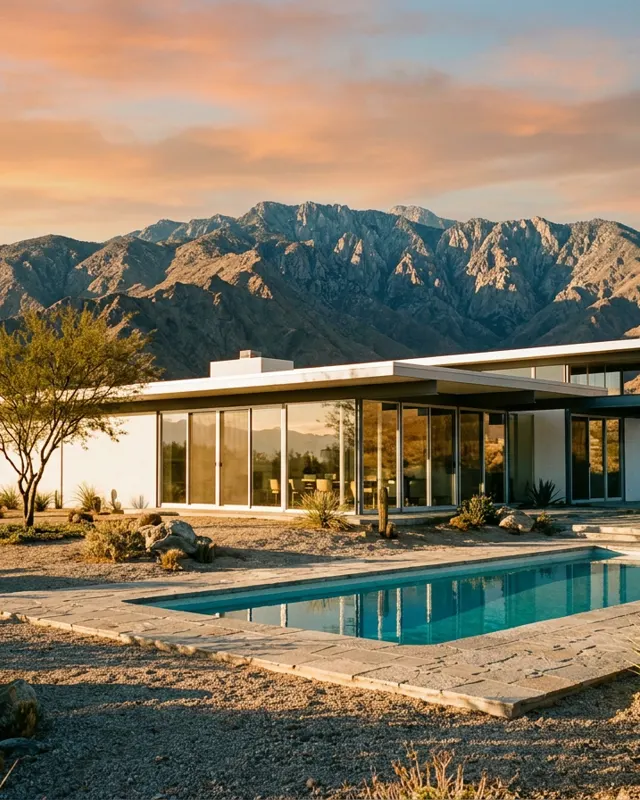
Many of the cabins were abandoned, and for decades they slowly weathered into sculpture. Lately, a new generation has arrived to restore them — adding solar panels, cedar decks, steel stock-tank pools — and the best of these renovations respect the original box rather than smothering it.
How to see them
Go at blue hour, when the sky over the Pinto Mountains turns the color of a gas flame and the first cabin lights flicker on. Stay on the public roads, keep your distance from private land, and leave every structure exactly as you found it. These buildings have survived eighty summers; they deserve a little courtesy.